Showing posts with label Family Acanthizidae. Show all posts

Sunday, April 8, 2012

>Aphelocephala nigricincta (Banded Whiteface)

Banded Whiteface

Whiteface แถบ (Aphelocephala nigricincta)


Banded Whiteface
Conservation status
Scientific classification
Kingdom:Animalia
Phylum:Chordata
Class:Aves
Order:Passeriformes
Family:Pardalotidae
Genus:Aphelocephala
Species:A. nigricincta
Binomial name
Aphelocephala nigricincta
(North, 1895)
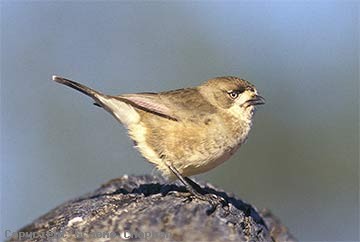
The Banded Whiteface (Aphelocephala nigricincta) is a species of bird in the Pardalotidaefamily. It is endemic to Australia.

>Aphelocephala pectoralis (Chestnut-breasted Whiteface)

Chestnut-breasted Whiteface


Chestnut-breasted Whiteface
Front view, showing white face and chestnut breast. Strzelecki Track, South Australia
Conservation status
Scientific classification
Kingdom:Animalia
Phylum:Chordata
Class:Aves
Order:Passeriformes
Family:Pardalotidae
Genus:Aphelocephala
Species:A. pectoralis
Binomial name
Aphelocephala pectoralis
(Gould, 1871)

The Chestnut-breasted Whiteface (Aphelocephala pectoralis) is a species of bird in thePardalotidae family. It  is  endemic
to Australia and found primarily in northern South Australia.

Habitat

The species's preferred habitat is open terrain in hilly areas such as tablelands, with a stony landscape and a patchy cover of perennial chenopod shrubs. The species is most frequently seen in areas where the topographic relief gives rise to creek lines, in which there tends to be denser shrubby vegetation. It feeds on the ground and takes seeds and arthropods. It is threatened byhabitat lossBulgunnia Station in the North West region of the state is a stronghold for the species and has been classified as an Important Bird Area.

Threats

Grazing by livestock and rabbits is the primary long-term threat as it reduces the recruitment of perennial shrubs, particularly low bluebush Maireana astrotricha, upon which the species depends. Heavy grazing of the chenopod shrubland has almost certainly caused the species to vacate previously used sites. Ironically, a recent reduction in rabbit numbers may have allowed a sufficient build up of fuel for fire to be a threat, particularly if occurring over a large area simultaneously. Some patches of habitat are threatened by opal mining. There has been a large increase in mining activity in South Australia in recent years, some of which is known to have directly impacted areas that have supported relatively high densities of the species.

>Aphelocephala leucopsis (Southern Whiteface)

Southern Whiteface


Southern Whiteface
Conservation status
Scientific classification
Kingdom:Animalia
Phylum:Chordata
Class:Aves
Order:Passeriformes
Family:Pardalotidae
Genus:Aphelocephala
Species:A. leucopsis
Binomial name
Aphelocephala leucopsis
(Gould, 1841)
The Southern Whiteface (Aphelocephala leucopsis) is a species of bird in the Pardalotidaefamily. It is endemic to Australia.

>>Genus Aphelocephala

Aphelocephala


Aphelocephala
Chestnut-breasted Whiteface (Aphelocephala pectoralis)
Scientific classification
Kingdom:Animalia
Phylum:Chordata
Class:Aves
Order:Passeriformes
Family:Acanthizidae
Genus:Aphelocephala
Oberholser, 1899
Species
3, see text
Aphelocephala is a genus of bird in the thornbill family Acanthizidae. The three species are collectively known as whitefaces. They are endemic to Australia, generally occurring in the arid centre of the continent. They are striking looking bird, particularly compared to their duller looking relatives, having dark upperparts and white breasts and faces (as suggested by the name). Two species, the Chestnut-breasted and Banded Whitefaces, break up the white undersides with a darker band (or double band). The three species have stubby bills and unlike rest of the Acanthizidae they consume large numbers of seeds in their diet.
It contains the following species:
  • Southern Whiteface (Aphelocephala leucopsis)
  • Chestnut-breasted Whiteface (Aphelocephala pectoralis)
  • Banded Whiteface (Aphelocephala nigricincta)

Saturday, April 7, 2012

>Acanthiza uropygialis (Chestnut-rumped Thornbill)

Chestnut-rumped Thornbill


Chestnut-rumped Thornbill
Conservation status
Scientific classification
Kingdom:Animalia
Phylum:Chordata
Class:Aves
Order:Passeriformes
Family:Pardalotidae
Genus:Acanthiza
Species:A. uropygialis
Binomial name
Acanthiza uropygialis
Gould, 1838
The Chestnut-rumped Thornbill (Acanthiza uropygialis) is a species of bird in thePardalotidae family. It is endemic to Australia.

>Acanthiza robustirostris (Slaty-backed Thornbill)

Slaty-backed Thornbill


Slaty-backed Thornbill
Conservation status
Scientific classification
Kingdom:Animalia
Phylum:Chordata
Class:Aves
Order:Passeriformes
Family:Pardalotidae
Genus:Acanthiza
Species:A. robustirostris
Binomial name
Acanthiza robustirostris
Milligan, 1903
The Approximate Distribution of the Slaty-backed Thornbill
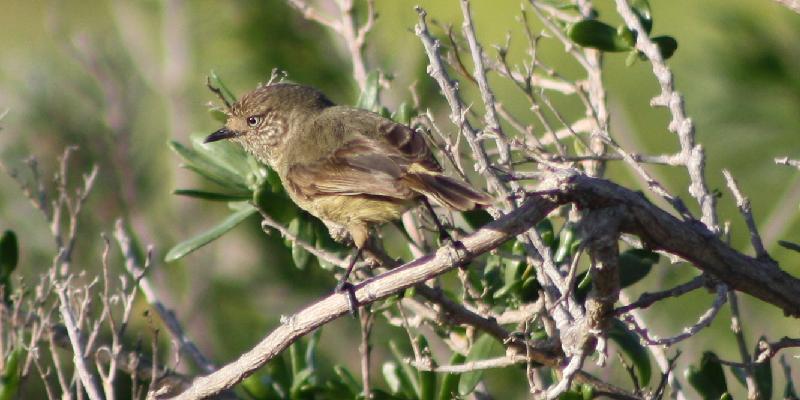
The Slaty-backed Thornbill (Acanthiza robustirostris) is a species of bird in the Pardalotidaefamily. It is endemic to Australia.

>Acanthiza reguloides (Buff-rumped Thornbill)

Buff-rumped Thornbill
Conservation status
Scientific classification
Kingdom:Animalia
Phylum:Chordata
Class:Aves
Order:Passeriformes
Family:Pardalotidae
Genus:Acanthiza
Species:A. reguloides
Binomial name
Acanthiza reguloides
Vigors & Horsfield, 1827 
The Buff-rumped Thornbill (Acanthiza reguloides) is a species of thornbill found in open forest land in east Australia, specifically around Sydney, south of Chinchilla and east of Cobar in an area of 1,000,000–10,000,000 km². The Buff-rumped Thornbill is found in temperate or subtropical/tropical moist environments living and feeding amidst the ground foliage, hence the term "buff-rump". However they are known to prefer nesting sites in areas above ground level, particularly amongst the bark of trees, one to two metres above the ground. Of a similar size to other thornbills, 8–10 cm long, the Buff-rumped Thornbill is identifiable by its "buff-coloured rump and belly" and white irides in its eye.
Since 1926 the Buff-rumped Thornbill and the Varied Thornbill (A. squamata) have been combined as a single species., however this is despite considerable differences between extreme examples of the two groups. The Buff-rumped Thornbill is described as 'uncommon' on some occasions however it is not deemed to be endangered and has been in the low risk category for theInternational Union for Conservation of Nature and Natural Resources since 1988.
Buff-rumped Thornbill girraween.ogg
Wallangarra, S. Queensland, Australia

>Acanthiza pusilla (Brown Thornbill)

Brown Thornbill


Brown Thornbill
Conservation status
Scientific classification
Kingdom:Animalia
Phylum:Chordata
Class:Aves
Order:Passeriformes
Family:Acanthizidae
Genus:Acanthiza
Species:A. pusilla
Binomial name
Acanthiza pusilla
(Shaw, 1790)
Acanthiza pusilla - Austin's Ferry.jpg
The Brown ThornbillAcanthiza pusilla, is a passerine bird usually found in eastern and south-eastern Australia, including Tasmania. It can grow up to 10 cm long, and feeds on insects.

>Acanthiza nana (Yellow Thornbill)

Yellow Thornbill


Yellow Thornbill
Conservation status
Scientific classification
Kingdom:Animalia
Phylum:Chordata
Class:Aves
Order:Passeriformes
Family:Acanthizidae
Genus:Acanthiza
Species:A. nana
Binomial name
Acanthiza nana
Vigors & Horsfield, 1827
Distribution of the Yellow Thornbill
The Yellow ThornbillAcanthiza nana, is a passerine bird usually found in Australia. It is protected under the National Parks and Wildlife Act, 1974.

>Acanthiza murina (New Guinea Thornbill)

New Guinea Thornbill

New Guinea Thornbill
Conservation status
Scientific classification
Kingdom:Animalia
Phylum:Chordata
Class:Aves
Order:Passeriformes
Family:Pardalotidae
Genus:Acanthiza
Species:A. murina
Binomial name
Acanthiza murina
(De Vis, 1897)
The New Guinea Thornbill or Papuan Thornbill (Acanthiza murina) is a species of bird in thePardalotidae family. It is found in West PapuaIndonesia and Papua New Guinea.
Its natural habitat is subtropical or tropical moist montanes.

>Acanthiza lineata (Striated Thornbill)

Striated Thornbill


Striated Thornbill
Conservation status
Scientific classification
Kingdom:Animalia
Phylum:Chordata
Class:Aves
Order:Passeriformes
Family:Pardalotidae
Genus:Acanthiza
Species:A. lineata
Binomial name
Acanthiza lineata
Gould, 1838
Distribution of the Striated Thornbill
The Striated Thornbill (Acanthiza lineata) is a species of bird in the Pardalotidae family. It isendemic to Australia.
Its natural habitat is subtropical or tropical dry forests.

Friday, April 6, 2012

>Acanthiza katherina (Mountain Thornbill)

Mountain Thornbill

 
Mountain Thornbill
Conservation status
Scientific classification
Kingdom:Animalia
Phylum:Chordata
Class:Aves
Order:Passeriformes
Family:Pardalotidae
Genus:Acanthiza
Species:A. katherina
Binomial name
Acanthiza katherina
De Vis, 1905
The Mountain Thornbill (Acanthiza katherina) is a species of bird in the Pardalotidae family. It is endemic to Australia.
Its natural habitat is tropical rainforest on the Atherton tableland in north-east Queensland.

>Acanthiza iredalei (Slender-billed Thornbill)

Slender-billed Thornbill


Slender-billed Thornbill
Conservation status
Scientific classification
Kingdom:Animalia
Phylum:Chordata
Class:Aves
Order:Passeriformes
Family:Pardalotidae
Genus:Acanthiza
Species:A. iredalei
Binomial name
Acanthiza iredalei
Mathews, 1911
Subspecies
Acanthiza iredalei hedleyi
Acanthiza iredalei iredalei
Acanthiza iredalei rosinae
The Slender-billed Thornbill (Acanthiza iredalei) is a small bird native to Australia. It includes three separate sub-species:
  • A. i. hedleyi
  • A. i. iredalei
  • A. i. rosinae
This thornbill can be found in shrublands and salt marshes, typically those around salt lakes or low heath on sand plains. It eats mostly insects and spiders captured in the shrubs of its habitat. It rarely feeds on the ground, preferring instead the higher elevations of shrubs and trees.
The Slender-billed Thornbill is rarely observed alone. They are usually seen in flocks of approximately eight birds or in pairs. Thornbill nests are small and built in low shrubs. They are constructed of grass, bark, cobwebs, and other shrubland debris. Females lay up to three eggs during the breeding season, which runs from July until November.

Description

The thornbill ranges from 9 to 10 centimeters in length. The colour of its back ranges from olive-grey to a darker olive-brown. The base of its tail is olive-yellow. Its underbelly is a smooth cream colour, and it has a dark bill and pale eyes.

Distribution and habitat

The Slender-billed Thornbill iredalei subspecies has six separate and isolated populations in Western Australia, and a large population in the Carnarvon bioregion.The hedleyi subspecies ranges across eastern Australia, and the rosinae subspecies can be found in southern Australia.

Conservation status

Broad status

The rosinae subspecies, most commonly found in Gulf St Vincent, is considered Vulnerable. The hedleyi subspecies, whose territory includes most of eastern Australia, is considered Near Threatened. The iredalei subspecies is also considered Vulnerable.
The thornbill (iredalei subspecies) is extinct in northern Australia, and is considered the only indigenous species to have become extinct in that location since European settlement.

Victoria

  • The Slender-billed Thornbill (A. i. hedleyi) is listed as threatened on the Victorian Flora and Fauna Guarantee Act 1988. Under this Act, an Action Statement for the recovery and future management of this species has not been prepared.
  • On the 2007 advisory list of threatened vertebrate fauna in Victoria, this species is listed as Near Threatened.

>Acanthiza inornata (Western Thornbill)

Western Thornbill


Western Thornbill
Conservation status
Scientific classification
Kingdom:Animalia
Phylum:Chordata
Class:Aves
Order:Passeriformes
Family:Pardalotidae
Genus:Acanthiza
Species:A. inornata
Binomial name
Acanthiza inornata
Gould, 1841
The Western Thornbill (Acanthiza inornata) is a species of bird in the Pardalotidae family. It isendemic to Australia.
Its natural habitat is Mediterranean-type shrubby vegetation.