Showing posts with label Family Philepittidae. Show all posts

Monday, June 25, 2012

>Neodrepanis hypoxanthus (Yellow-bellied Sunbird-asity)

Yellow-bellied Sunbird-asity


Yellow-bellied Sunbird-asity
Conservation status

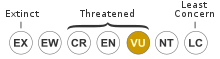
Vulnerable (IUCN 3.1)
Scientific classification
Kingdom:Animalia
Phylum:Chordata
Class:Aves
Order:Passeriformes
Family:Philepittidae
Genus:Neodrepanis
Species:N. hypoxantha
Binomial name
Neodrepanis hypoxantha
Salomonsen, 1933
The Yellow-bellied Sunbird-asityNeodrepanis hypoxantha, is a small species of bird from the asity family. The species is endemic to montane forest above 1600 m on the island of Madagascar. The species is sometimes known simply as the Yellow-bellied Asity. The plumage of male Yellow-bellied Sunbird-asities is very bright, with clean yellow undersides and dark black upper sides with an iridescent blue sheen; the females are duller. The eye is surrounded by a bright blue wattle which derives its colour, like the rest of the asities, from bundles of collagen. The bill is long and decurved, as it is adapted for nectar feeding.
Yellow-bellied Sunbird-asities are active nectar feeders. They will aggressively defend a nectar source from rivals of the same species as well as from sunbirds.
The Yellow-bellied Sunbird-asity is listed as vulnerable by BirdLife International and the IUCN. It was once considered to be an endangered species, and even possibly extinct; however, this was due to a lack of ornithological surveys in its high-altitude range. Subsequent research has found it to be more abundant than previously suspected, although it is still considered threatened due to habitat loss and fragmentation.

>Neodrepanis coruscans (Common Sunbird-asity)

Common Sunbird-asity


Common Sunbird-asity
Conservation status

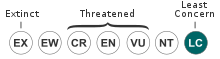
Least Concern (IUCN 3.1)
Scientific classification
Kingdom:Animalia
Phylum:Chordata
Class:Aves
Order:Passeriformes
Family:Philepittidae
Genus:Neodrepanis
Species:N. coruscans
Binomial name
Neodrepanis coruscans
Sharpe, 1875
The Common Sunbird-asity or Sunbird AsityNeodrepanis coruscans, is a species of bird in the Philepittidae family. It is endemic to Madagascar.
Its natural habitat is subtropical or tropical moist lowland forests.

>>Genus Neodrepanis

Neodrepanis


Neodrepanis
Scientific classification
Kingdom:Animalia
Phylum:Chordata
Class:Aves
Order:Passeriformes
Family:Philepittidae
Genus:Neodrepanis
Sharpe, 1875
Neodrepanis is a genus of bird in the asity family Philepittidae. It contains the following species:
  • Common Sunbird-asity (Neodrepanis coruscans)
  • Yellow-bellied Sunbird-asity (Neodrepanis hypoxanthus)

Sunday, June 24, 2012

>Philepitta schlegeli (Schlegel's Asity)

Schlegel's Asity


Schlegel's Asity
Conservation status

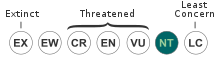
Near Threatened (IUCN 3.1)
Scientific classification
Kingdom:Animalia
Phylum:Chordata
Class:Aves
Order:Passeriformes
Family:Philepittidae
Genus:Philepitta
Species:P. schlegeli
Binomial name
Philepitta schlegeli
Schlegel, 1867
The Schlegel's Asity (Philepitta schlegeli) is a species of bird in the Philepittidae family. It is endemic to Madagascar. Its natural habitats are subtropical or tropical dry forests and subtropical or tropical moist lowland forests. It is threatened by habitat loss.

>Philepitta castanea (Velvet Asity)

Velvet Asity

Velvet Asity
Conservation status

Least Concern (IUCN 3.1)
Scientific classification
Kingdom:Animalia
Phylum:Chordata
Class:Aves
Order:Passeriformes
Family:Philepittidae
Genus:Philepitta
Species:P. castanea
Binomial name
Philepitta castanea
(Müller, 1776)
The Velvet AsityPhilepitta castanea, is a species of bird in the Philepittidae family. It isendemic to Madagascar.
Its natural habitat is subtropical or tropical moist lowland forests.

>>>Family Philepittidae >>Genus Philepitta

Philepitta


Philepitta
Philepitta castanea
Scientific classification
Kingdom:Animalia
Phylum:Chordata
Class:Aves
Order:Passeriformes
Family:Philepittidae
Genus:Philepitta
I. Geoffroy Saint-Hilaire, 1838
Philepitta is a genus of bird in the Philepittidae family. It contains the following species:
  • Velvet Asity (Philepitta castanea)
  • Schlegel's Asity (Philepitta schlegeli)

>>>Asity

Asity


Asities
Velvet Asity, Philepitta castanea (male above, female right and juvenile below).
Scientific classification
Kingdom:Animalia
Phylum:Chordata
Class:Aves
Order:Passeriformes
Suborder:Tyranni
Family:Philepittidae
Sharpe, 1870
Genera
Philepitta
Neodrepanis
The asities, are a family, the Philepittidae, of small suboscine
passerine birds. The family consists of four species in two genera endemic to Madagascar. They were thought to have been related to the pittas, hence the scientific name of the family, but a 1993 study suggested that they are actually just a subfamily of broadbills.The morphology of the syrinx is very similar to the Grauer's Broadbill of Africa. Here they are considered traditionally as a separate family. Some authors have placed the Sapayoa of South America in the family, although it is now mostly considered a broadbill. The Neodrepanis species are known as sunbird-asitiesand were formerly known as false sunbirds.

Description

Asities are small forest birds with sexually dichromic plumage and brightly coloured wattles around the eyes of the males. These wattles, which are most conspicuous during the breeding season, get their colour from arrays of collagen fibres. This method of pigmentation is unique in the animal kingdom. Several other features separate them from the broadbills, they possess twelve tail feathers on extremely short (almost non-existent in thePhilepitta species) tails, their syrinx is encased with a large bronchial ring and they have forked tongues adapted to nectivory. They have a long outer primary which buzzes in flight, possibly used in signalling during courtship. The two genera are quite distinct.

Diet and feeding

The major component of the diet of asties is fruit. A wide range of different fruit is taken by the family, and they are among the most important avian dispersers of seeds, as there are very few other frugivorous birds in the forests of Madagascar. They will also take insects. TheNeodrepanis sunbird-asities will take nectar, but do so with a long tongue rather than insering their curved bills far into flowers.

Breeding behaviour

Rainforest asities breed during the Malagasy rainy season, beginning just before the rains in September to November.The Velvet Asity begins breeding slightly sooner in the north of its range. That species is the only one for which detailed information about breeding is available. It has a polygynous breeding system, with males holding small territories or leks where they display to passing females. Nest building and raising the young is incubation solely by the females. There are reports of Yellow-bellied Sunbird-asities feeding young in the nest and recently fledged chicks, so there is clearly some variation in breeding strategies in the family. The nests of the family are elaborate; pear-shaped woven structures hanging from branches, similar to those of broadbills, although uniquely amongst birds which weave nests the entrance to the nest is pushed created by pushing through the wall after constructed (instead of the usual scenario where the entrance is weaved into the fabric of the nest).

Threats and conservation

One species, the Yellow-bellied Sunbird-asity, is listed as vulnerable by BirdLife International and the IUCN. It was once considered to be an endangered species, and even possibly extinct; however this was due to a lack of ornithological surveys in its high-altitude range. Subsequent research has found it to be more abundant than previously suspected, although it is still considered threatened due to habitat loss and fragmentation. Schlegel's Asity is considered near threatened; it has a highly fragmented distribution but numerous strongholds in inaccessible ravines.

Species

  • Family: Philepittidae
    • Genus Philepitta
      • Velvet Asity, Philepitta castanea
      • Schlegel's Asity, Philepitta schlegeli
    • Genus Neodrepanis
      • Common Sunbird-asity, Neodrepanis coruscans
      • Yellow-bellied Sunbird-asity, Neodrepanis hypoxanthus