Showing posts with label Genus Chauna. Show all posts

Sunday, June 3, 2012

>Chauna chavaria (Northern Screamer)

Northern Screamer


Northern Screamer
Conservation status

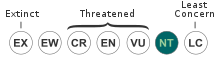
Near Threatened (IUCN 3.1)
Scientific classification
Kingdom:Animalia
Phylum:Chordata
Class:Aves
Order:Anseriformes
Family:Anhimidae
Genus:Chauna
Species:C. chavaria
Binomial name
Chauna chavaria
Linnaeus, 1766
The Northern Screamer (Chauna chavaria), also known as the Black-necked Screamer, is a large species of bird in the small family Anhimidae, the screamers. It is a resident breeder in northern Colombia, in Chocó, Antioquia, Córdoba, Sucre, Bolívar, Magdalena, Santander, and Cesar Departments and northwestern Venezuela, in Zulia, Mérida, and Trujillo States.On average, they are 88.9 cm (35 in) long and weigh about 3.9 kg (8.6 lb).
They are Near Threatened.

Captivity

Not many zoos can show the northern screamer. Most zoos that show them are in Colombia like the Cali Zoo. and the Matecaña City Zoo in Pereira, Risaralda

>Chauna torquata (Southern Screamer)

Southern Screamer


Southern Screamer
At Artis Zoo, Netherlands
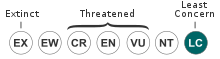
Conservation status
Scientific classification
Kingdom:Animalia
Phylum:Chordata
Class:Aves
Order:Anseriformes
Family:Anhimidae
Genus:Chauna
Species:C. torquata
Binomial name
Chauna torquata
Oken, 1816
Southern Screamer range
The Southern Screamer (Chauna torquata), also known as the Crested Screamer, belongs to the order Anseriformes. It is found in southeastern Peru, northern Bolivia, Paraguay, southern Brazil, Uruguay and northern Argentina.Its diet consists of plants stems, seeds, leaves, and, rarely, small animals.

Description

The Southern Screamer averages 81–95 cm (32–37 in) long and weighs 3–5 kg (6.6–11 lb).They are the heaviest, although not necessarily the longest, of the three screamers. The wingspan is around 170 cm (67 in). It lives in tropical and sub-tropical swamps, estuaries and watersides.

Breeding

The Southern Screamer establishes monogamous relationships that last its lifetime, estimated to be 15 years. Courtship involves loud calling by both sexes, which can be heard up to two miles away. For the nest the couple makes a big platform of reeds, straws, and other aquatic plants in an inaccessible place near water. The female lays between two and seven white eggs. The couple share incubation, which takes 43 to 46 days. Chicks leave the nest as soon as they hatch, but the parents care for them for several weeks. The fledging period takes 8 to 14 weeks.

Behaviour

The Southern Screamer is a good swimmer, having partially webbed feet, but prefers to move on the ground. The bony spurs on its wings are used for protection against rival screamers and other enemies. Although it is non-migratory, it is an excellent flier. It lives in large flocks, feeding on the ground in grasslands and cultivated fields until nesting season, when birds pair off.

Gallery


>>Genus Chauna

Chauna


Chauna
Southern Screamer (Chauna torquata)
Scientific classification
Kingdom:Animalia
Phylum:Chordata
Class:Aves
Subclass:Neornithes
Infraclass:Galloanserae
Order:Anseriformes
Family:Anhimidae
Genus:Chauna
Illiger, 1811
Species
Chauna chavaria
Northern Screamer
Chauna torquata
Southern Screamer
Chauna is a genus of birds in the screamer family. Its two members are found in wetlands of South America. The species are
  • Southern Screamer or Crested ScreamerChauna torquata
  • Northern Screamer or Black-necked ScreamerChauna chavaria
They are large, bulky birds, with a small downy head, long legs and large feet which are only partially webbed. They have large spurs on their wings which are used in fights over mates and territorial disputes. The Southern Screamer is overall fairly common and sometimes considered a pest as it raids crops and competes with farm birds for food. In contrast, the Northern Screamer is relatively rare and therefore considered near threatened.