Showing posts with label Genus Chrysomma. Show all posts

Tuesday, March 19, 2013

>Chrysomma sinense (Yellow-eyed Babbler)

Yellow-eyed Babbler


Yellow-eyed Babbler
Conservation status

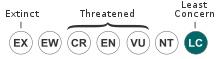
Least Concern (IUCN 3.1)
Scientific classification
Kingdom:Animalia
Phylum:Chordata
Class:Aves
Order:Passeriformes
Family:Sylviidae
Genus:Chrysomma
Species:C. sinense
Binomial name
Chrysomma sinense
(Gmelin, 1789)
Synonyms
Pyctorhis sinensis
The Yellow-eyed Babbler (Chrysomma sinense) is a passerine bird species found in groups in open grass and scrub in south Asia. The common name refers to its traditional placement in the Old World babbler family Timaliidae although the genus Chrysomma forms a clade along with the parrotbills and Sylvia warblers within the family Sylviidae.


Description


In typical habitat of grass, note the yellow nostril. (Hodal, Haryana)
The Yellow-eyed Babbler is about 18 centimetres (7.1 in) long with a short bill and a long graduated tail. The body above is brown and the wings are cinnamon coloured. The lores and supercilium are white and the rim of the eye is orange-yellow in adult birds. The beak is black. The underside is whitish buff. The central tail feathers are about twice as long as the outermost. The sexes are indistinguishable in the field.
Within its wide distribution range there are some differences in plumages between populations that have been considered as subspecies. The nominate subspecies is found in Burma, Laos and Thailand. The population in Sri Lanka, nasale, has black nostrils and a stouter bill. The population across much of India, hypoleucum, has yellow nostrils (as with the nominate subspecies) and is paler in plumage. The population in the northeast Duars of India has an almost slaty crown and darker wings and has been called as saturatior.

Distribution and habitat

The Yellow-eyed Babbler has an extremely large range and is native to Bangladesh, China,India, Lao People's Democratic Republic, Myanmar, Nepal, Pakistan, Sri Lanka, Thailand and Viet Nam.
The usual habitat is grassy or thorny scrub both in dry and wet regions as well as farmland. They are found mainly on the plains but can be found in the lower hills (1200 m).It is absent in the dense forest region of the Western Ghats and occurs only on the eastern edges or in gaps such as at Palghat.

Behaviour and ecology


Perched on grass (Hodal, India)
Measurements
hypoleucum
Length140 mm (5.5 in)
CulmenMale black symbol.svg14–15 mm (0.6–0.6 in)
Female black symbol.svg13–16 mm (0.5–0.6 in)
WingMale black symbol.svg62–70 mm (2.4–2.8 in)
Female black symbol.svg62–70 mm (2.4–2.8 in)
TailMale black symbol.svg73–102 mm (2.9–4.0 in)
Female black symbol.svg78–100 mm (3.1–3.9 in)
Head31–33 mm (1.2–1.3 in)
TarsusMale black symbol.svg22–27 mm (0.9–1.1 in)
Female black symbol.svg25–27 mm (1.0–1.1 in)
Weight15–21 g (0.5–0.7 oz)
nasale
Length142–162 mm (5.6–6.4 in)
Culmen14–15 mm (0.6–0.6 in)
Wing63–69 mm (2.5–2.7 in)
Tail70–86 mm (2.8–3.4 in)
Head33–35 mm (1.3–1.4 in)
Tarsus24–26 mm (0.9–1.0 in)
Like babblers, these birds are usually seen in small groups of five to fifteen, especially in the non-breeding season. They are usually found inside bushes, emerging up to the top of a stem and then diving back into cover to forage. They feed mainly on insects but take berries (Lantana and Salvadora) as well as nectar. When capturing insects, they may hold them down with their feet. The group constantly produces a series of cheeping or churring calls. During the breeding season, mainly the southwest monsoon (June to August) but sometimes during the receding monsoon, the song is a strong whistling twee-twee-ta-whit-chu, often delivered from a prominent perch. The colour of the inside of the mouth is said to turn from orange-brown to black during the breeding season. They appear to nest cooperatively, the nest being a deep cone made with grass and lined with fine fibre. The nest is wedged between upright stems, the vertical stems being incorporated into the wall of the nest. The outside of the nest is well covered in cobwebs. The usual clutch is four but varies from three to five. The eggs are pinkish white with chestnut-red patches. Both parents take part in incubation and feeding the young. The eggs hatch after about 15–16 days and the young birds fledge after about 13 days. Adult birds have been seen feigning injury presumably to detract predators.Birds roost communally in the centre of a bush, all facing in the same direction and sitting side by side. Members of a group will preen each other. In an apparent territorial display, a pair of birds were found to sing while facing another singing pair and they all simultaneously bobbed their heads while perching on legs held straight to appear tall.
Shikras may sometimes attempt to prey on these birds.
Known in parts of northern India as gulab chashm meaning "yellow spectacles", they were sometimes kept as cagebirds.


>Chrysomma altirostre (Jerdon's Babbler)

Jerdon's Babbler


Jerdon's "Babbler"
Conservation status

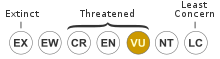
Vulnerable (IUCN 3.1)
Scientific classification
Kingdom:Animalia
Phylum:Chordata
Class:Aves
Order:Passeriformes
Family:Sylviidae
Genus:Chrysomma
Species:C. altirostre
Binomial name
Chrysomma altirostre
Jerdon, 1862
Synonyms
Moupinia altirostris
Pyctorhis altirostris
Pyctorhis griseigularis
Timalia altirostris
Jerdon's Babbler (Chrysomma altirostre) is an endangered passerine bird from South Asia. Formerly placed in the Timaliidae family – hence the common name "babbler" –, the genus Chrysomma and its relatives are actually closer to the typical warblers and parrotbills in the Sylviidae.

Description

Chrysomma sinense looks like a brighter version of Chrysomma altirostre
Measuring 16–17 cm in length, it is quite intermediate in habitus between certain typical warblers (Sylvia) and the parrotbills(Paradoxornis). Like these, it is a drab bird with a long tail used to balance when creeping through the vegetation; its bill is thicker than in Sylvia but not as heavy as in Paradoxornis. Buffy chestnut brown above and a slightly lighter yellowish-brown on the belly, its lores are pale greyish, as are the throat and breast. The tail and a wing patch are redder than the rest of the upperside. The legs and feet are dark, the bill is greyish-horn colored above and pale below; the eyes' irides are yellowish-brown and a thin nude ring of greenish-yellow skin surrounds the eye.
The sexes are alike; young birds have a more orange hue to the upperside plumage, and the lower bill is pink. Differences between subspecies are slight, with the central population essentially have richer chestnut brown and darker grey colours.
Its relative, the Yellow-eyed "Babbler" (C. sinense), looks like a brighter version of the same but has somewhat more vivid colors, with white replacing grey in the plumage, an additional white supercilium, yellowish legs, feet and irides, and an orange-yellow eye-ring.
The song is a weak 4- to 8-note warbling chi-chi-chi-chew-chew-chew, tew-tew-tew-tew chew or ih-ih-ih-ih chew chitit chew i'wwiuu, with a drawn-out end note and sometimes starting with a chatter of itch, itit or tchew. Birds sing usually in the early morning and in the evening, perching upright on a reed, with the head slightly elevated. Calls include a short ticor tsik, sometimes extended into a series ts-ts-tsik which may end in a plaintive tew.

Subspecies and range

Three subspecies are recognized, based mainly on their allopatric ranges:

Myanmar Jerdon's "Babbler

Chrysomma altirostre altirostre Jerdon 1862
Described above.
Floodplains of the Irrawaddy River from Bhamo to Bago and up the Sittaung River nearly to Taungoo in Myanmar. Possibly extinct. The type specimen of the nominate subspecies – and thus the entire species – was collected on an island in the Ayeyarwady off Thayetmyo.

Terai Jerdon's Babbler

Chrysomma altirostre griseigularis
Darker and richer in colour overall, more reddish above, lores blackish. Stronger grey hue on throat and breast.
Sub-Himalayan Terai, from western Nepal and perhaps Bhutan to the Dooars and Brahmaputra floodplain of India, Cachar and the Naga Hills; possibly also the Surma River valley and Haor basin in Bangladesh, where it used to occur. A NHM specimen is supposedly from Bhamo in the Kachin State of Myanmar, but may just as well be mislabelled.
The Sukla Phanta Wildlife Reserve in Nepal represents the western limit of its distribution.

Sind Jerdon's Babbler

Chrysomma altirostre scindicum
Resembles altirostre.
Indus basin of Pakistan, where recorded from a few disjunct areas:
Sanghar, Tharparkar and Umerkot Districts of SE Sindh Province. Population possibly extinct.
Dadu, Khairpur, Larkana, Shaheed Benazeerabad District, Shikarpur and Sukkur Districts of NC Sindh Province, approximately from Sukkur (where the type specimen of scindicum was collected) to Nawabshah.
Dera Ghazi Khan, Dera Ismail Khan, Mianwali and Muzaffargarh Districts between S North-West Frontier and SW Punjab Provinces. Old records specifically from near Bhamb, Jampur and Khanwah. Recent records exist from the Dera Ismail Khan area, Dhap Shumali, Taunsa Barrage and Chashma Barrage (the northernmost known site for this subspecies)

Ecology

It is presumably an all-year resident and inhabits dense growth near water, often in the floodplains and around oxbow lakes. Pairs or families of these birds, occasionally small flocks of 1-2 dozen, move about quietly in dense stands of grasses and reeds that grow several meters high, usually avoiding lower growth and shrubland. A typical foraging technique involves perching nearly horizontally on a reed stem, picking up a leaf sheath with the bill, and quickly tearing off the leaf and its base sheet to expose small arthropods and other invertebrates. The tearing of dry leaves produces a subdued crackling sound that can sometimes be heard from some dozens of meters away.
Plants dominating its favorite habitat are typically tall reeds several meters in height. C. a. scindicum is usually found in association with Hardy Sugarcane (S. arundinaceum) and Kans Grass (S. spontaneum), while C. a. griseigularis is also found in Munja (S. munja) stands, and in the east of its range in Ravennagrass (S. ravennae) and perhaps S. procerum. Prime habitat also contains a generous amount of Common Reed (Phragmites australis) or Khagra Reed (P. karka), as well as Typha reedmaces (e.g.Typha angusta). On the other hand, sugarcane plantings or other single-species reedbeds as well as lower growth are not very attractive to the species. Other plants, typically grasses, are found to a lesser extent in the bird's haunts. They include such species as satintails (Imperata, e.g. Cogongrass I. cylindrica), Giant Cane (Arundo donax), Vetiver or khus (Cymbopogon zizanioides),Desmostachya bipinnata, Narenga porphyrocoma and Themeda arundinacea.

Conservation status

It is classified as Vulnerable by the IUCN, being nowhere common and at least in Assam (where it is perhaps most numerous) its numbers are declining. The nominate subspecies from Myanmar might be extinct already. It was last seen in July 1941 in habitat fragments at Myitkyo, with the last specimen taken in 1914 or perhaps as late as the mid-1930s. Due to the inaccessibility of its range and consequent lack of fieldwork, it might conceivably still exist however. Likewise, the continuing existence of this species in Bangladesh is uncertain. The subspecies griseigularis is the only one known to occur in protected areas, namely the Dibru-Saikhowa, Kaziranga andManas National Parks in Assam, and the Chitwan National Park and Sukla Phanta Wildlife Reserve of Nepal. Its presence in the latter country was not documented until 1989/1990. Subspecies scindicum is known to be rare and has been declining throughout recent decades. At present, the only place where it is seen fairly often is the Rohri Canal south of Khairpur.
Altogether, less than 10,000 adult birds are believed to remain. Its threat category is VU A2c+3c+4c. This means that its population has declined by an estimated 30% and is expected to continue to do so for another decade at least. The reasons are not fully understood, but the population reduction is probably related to habitat destruction by drainage and damming of wetlands for agriculture and flood control, and these threats are not expected to cease anytime soon. In 1933 it was stated that to attract the birds there ought to be
"... a regular 'sea of sugarcane', preferably not less than six feet high."
but in our time, such habitat is extremely rare.
Sustainable cutting of reedbeds, which yield material for human use, is apparently tolerated by C. altirostre. Large flocks of the species are found in partially cut or burned reedbeds, thus if large-scale clear-cutting is avoided, human use of reeds may in fact improve habitat quality by preventing the simultaneous aging and decay of wide stretches of habitat. As a rule-of-thumb, as long as a healthy population of Phragmites reeds persists, the birds are likely to persist too.

>Chrysomma poecilotis (Rufous-tailed Babbler)

Rufous-tailed Babbler


Rufous-tailed Babbler
Conservation status

Least Concern (IUCN 3.1)
Scientific classification
Kingdom:Animalia
Phylum:Chordata
Class:Aves
Order:Passeriformes
Family:Sylviidae
Genus:Chrysomma
Species:C. poecilotis
Binomial name
Chrysomma poecilotis
(Verreaux, 1870)
Synonyms
  • Moupinia poecilotis
The Rufous-tailed Babbler (Chrysomma poecilotis) is a bird species in the family Sylviidae. It was formerly included with the Old World babblers (Timaliidae), but is actually very closely related to the typical warblers (Sylvia). It is endemic to China.

>>Genus Chrysomma

Genus Chrysomma


Chrysomma
Yellow-eyed "Babbler", Chrysomma sinense
Scientific classification
Kingdom:Animalia
Phylum:Chordata
Class:Aves
Order:Passeriformes
Family:Sylviidae
Genus:Chrysomma
Blyth, 1843
Species
Chrysomma altirostre
Chrysomma poecilotis
Chrysomma sinense
Synonyms
Moupinia
Chrysomma is a songbird genus. Long believed to be Timaliidae (Old World babblers), they are actually quite closely related to the typical warblers and even closer to the parrotbills, and therefore a member of the family Sylviidae.
Species are:
  • Jerdon's "Babbler", Chrysomma altirostre
    • Myanmar Jerdon's "Babbler", Chrysomma altirostre altirostre - extinct (1940s)
  • Yellow-eyed "Babbler", Chrysomma sinense
  • Rufous-tailed "Babbler", Chrysomma poeciloti